Our Country
Colombia, located in South America, is an amazing country with coastlines on both the Atlantic and Pacific Oceans. It displays a wonderful geography that extends from the sea level to snowy peaks that reach up to 18.946ft.
This privileged location allows the distribution of countless species of flora and fauna that position it as the second most biodiverse country in the world.
Colombia is divided into 6 natural regions which encompass diverse landscapes, climates, flora and fauna, as well as cultural manifestations, making your experience
in each region so diverse that you'll feel like you're visiting many different countries in one.
Colombia is also known as the land of a thousand rhythms for its diverse musical traditions that resonate throughout the country and have made it a cradle of world-class musicians. Here, joy will be contagious on every corner, and you'll experience the warmth and friendliness of its people.

Caribbean Region
The Caribbean Region of Colombia rests on the Atlantic Ocean and lives in a continuous summer that allows you to enjoy crystal clear beaches with warm waters, surrounded by exuberant nature.
You can enjoy delicious cuisine based on seafood, and the joy of its people represented in different cultural manifestations through music, dance and carnivals.
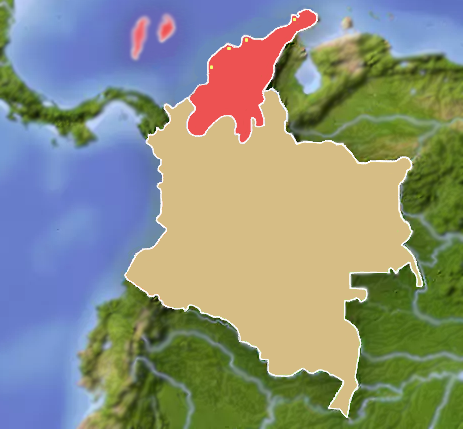
This region has many touristic attractions, the most representative being the cities of Cartagena, Santa Marta and Barranquilla, and also Cabo de la Vela located in the middle of the desert in the department of La Guajira.
Cartagena
Cartagena de Indias is a city where history and modernity blend seamlessly. The old city, a UNESCO World Heritage Site, is encircled by walls built in the 16th century to protect it from pirate attacks. Strolling along its cobblestone streets offers an experience that merges art, history, and a beautiful landscape on the shores of the Caribbean Sea. In its parks, you can enjoy traditional dances and the rhythmic drumming of African origin.
You can also visit the paradisiacal beaches of the Rosario Islands Archipelago National Natural Park, made up of 28 islands whose extensive coral areas and associated fauna make it a perfect setting for diving and snorkeling.


Santa Marta
Santa Marta is the second oldest city in South America and is known as the Pearl of America. Here, ancient traditions converge with the sea and diverse, contrasting natural landscapes, including the world's highest coastal mountain.
In the city, you can enjoy countless beaches with crystal-clear waters and mountain views. There's also a wide range of culinary and cultural offerings to experience all the charm of the Colombian tropics.
A central point of interest in this city is the Sierra Nevada de Santa Marta, a mountain range separate from the Andes. Home to four distinct indigenous communities, it stretches from sea level to snow-capped peaks reaching 18,700 ft high. The foothills of the Sierra form a variety of stunning, protected beaches, including Tayrona National Natural Park. At higher elevations, the mountainous terrain creates distinct altitudinal zones, ideal for cultivating coffee and cacao, as it is the case in Minca. A city with endless attractions.


Barranquilla
Barranquilla is an important port in the Caribbean, and an industrial city located on the western bank of the Magdalena River.
This city celebrates Colombia's most important folk festival each year, the Carnival of Barranquilla, which has been declared an Intangible Cultural Heritage of Humanity by UNESCO. For four days, people from all corners of the country come to enjoy this festival with its parades of troupes, floats, and diverse cultural activities that involve the entire city. It's an explosion of color, music, and joy that allows you to experience Colombian Caribbean culture in all its splendor.


Cabo de la Vela
Cabo de la Vela, located in the department of La Guajira, is a place nestled in the far north of Colombia in an area dominated by the desert, with very few inhabitants, most of whom belong to the Wayúu indigenous community.
This place is characterized by turquoise beaches with yellow and orange sands that create a lush landscape, offering absolute relaxation as it is a place disconnected from civilization. The predominant way of life here is that of the local indigenous community, who have adapted to the harshness of the desert. The women weave colorful bags that hold deep meanings from their worldview, and these bags have transcended the Wayuu borders, being used by a large majority of the Colombian population.
It is a wonderful place for kitesurfing.


Andean Region

This is the most populated region of the country and is located within the 3 mountain ranges that cross the country: the eastern, the central and the western.
The altitude of the mountain ranges gives rise to different thermal zones where different products can be grown throughout the year.
Some of the best-known cities in this area are: Bogotá, Cali, Medellín, Bucaramanga, and the coffee-growing region, which includes the departments of Quindío, Risaralda, and Caldas.
Bogotá
Bogotá, founded in 1538, is the capital of the country and is a modern and vibrant metropolis where you will always find endless options for activities thanks to its intense cultural life that comes from a place where people from all over the country converge.
The gastronomic offer is very extensive, with restaurants specializing in cuisine from different parts of the world and also from different regions of the country.
You'll find neighborhoods with distinct architectural styles that contrast with each other, allowing you to appreciate a truly multicultural city. You can also explore the colonial neighborhood of La Candelaria, where you'll see houses that have preserved the style of that era. The city blends history with the cosmopolitan feel by its wonderful nightlife.


Medellín
Medellín is the second most populated city in Colombia, which rests in the middle of an imposing mountainous landscape that gives it a temperate climate with an average of 21°C throughout the year, which is why it is called the City of Eternal Spring.
In this city you will find great urban development, which, combined with the cheerfulness of its inhabitants, a lively nightlife and a wide gastronomic offer, will allow you to have a great experience during your visit.
The annual Flower Fair, which enjoys worldwide recognition, is celebrated with the flower growers parade through the streets of Medellín with flower-decorated floats and carriages, representing different cultural expressions of the country. A spectacle like no other.


Eje Cafetero
This region is the birthplace of magnificent Colombian coffee, renowned as one of the best in the world. The mountains, landscape, and culture of this area combine to form the Coffee Cultural Landscape, declared a World Heritage Site by UNESCO.
The scenery here is so breathtaking that simply contemplating the mountains, rivers, biodiversity, and spring-like climate would be enough for a relaxing and unforgettable experience. However, there are also numerous activities and places to visit, such as the National Coffee Park, the Butterfly Garden, or rafting on the La Vieja River.
You'll have the opportunity to interact with the locals and immerse yourself in the joy of their culture, the vibrant colors and beauty of their music and dances. A place that you will never forget.


Amazon Region
.png)
The Amazon is known as the Lung of the World, as it is the largest tropical ecosystem in the world and the place with the greatest biodiversity on the planet.
In Colombia, this area occupies 42.3% of the continental territory and contains a great biodiversity represented by thousands of species that have not even been documented yet.
The Amazon River, the longest, widest and most voluminous river in the world, is a defining feature of this landscape. It crosses three countries and is home to nearly 3,000 species of fish.
Leticia
Leticia is the capital of the Amazonas department and is nestled within the vast Amazon rainforest. Visiting this corner of Colombia offers a complete escape from the hustle and bustle of city life and modern life, allowing for a deeper connection with the lush nature of the jungle.
Travelling along the river you can observe various natural spectacles such as the Victoria Regia, which is the largest lotus species in the world, pink dolphins, macaws, primates, anacondas and glass frogs among others.
In this area of the country you can also appreciate the wide cultural diversity of this region where several indigenous communities such as the Tikuna, Yagua, Macedonia and Hitoma coexist.


